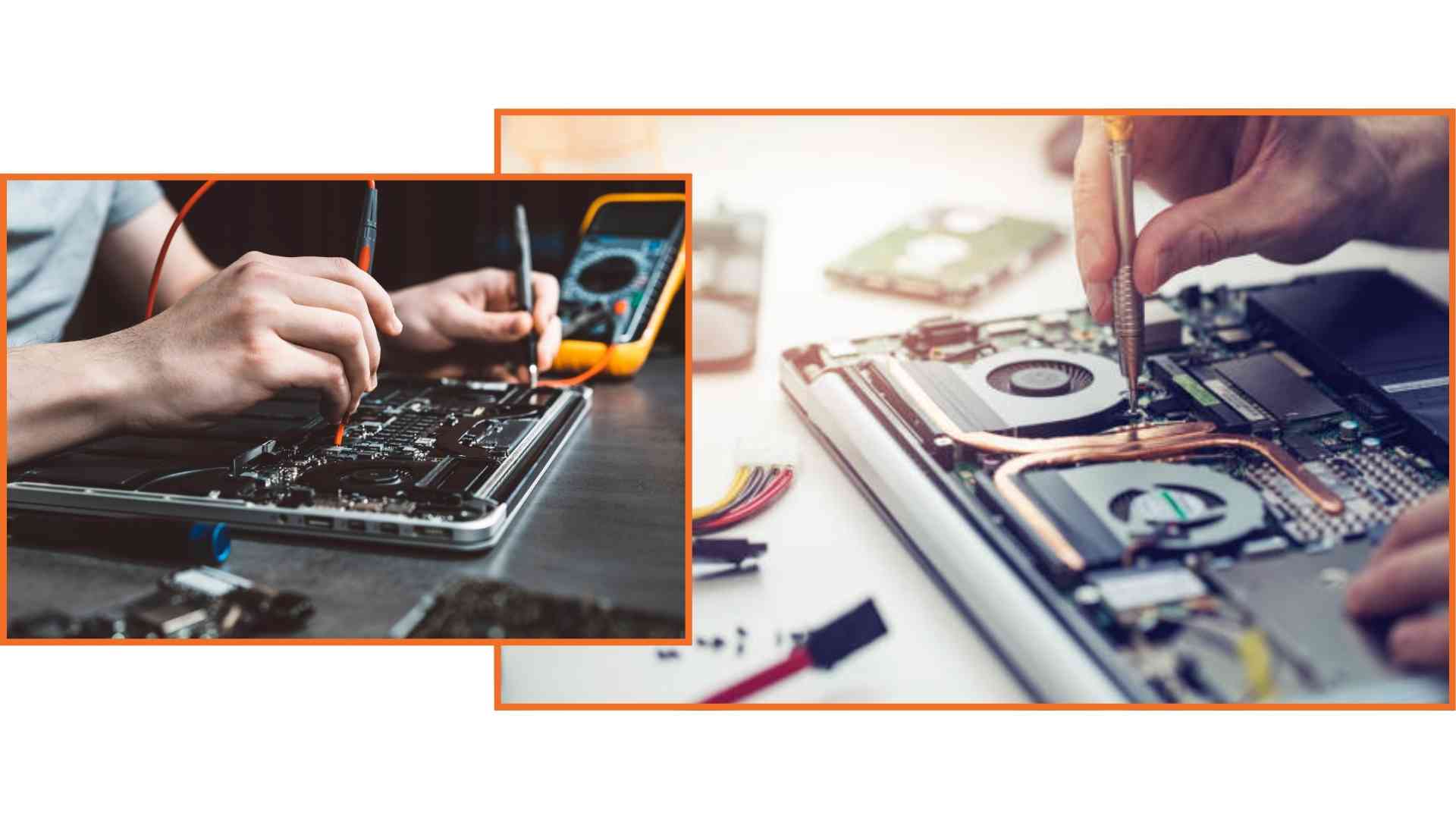
"How long will it take?" is usually the first question after "what's wrong with it?" The honest answer is that it depends heavily on what's actually broken — a loose connector and a dead motherboard are not the same job, even if both start with "my laptop won't turn on." Knowing the realistic range for each type of repair helps set the right expectations before you drop it off.
What Actually Determines Repair Time
Repair duration isn't random, it comes down to a handful of factors that apply to almost every job:
- Whether the fault requires diagnosis alone or diagnosis plus parts
- Whether the needed part is in stock locally or has to be sourced/imported
- Whether the repair is a simple swap or board-level chip repair
- How backed up the service center is at the time
- Whether the issue turns out to be more complex than the initial symptom suggested
Realistic Timelines by Repair Type
1. Diagnosis Only
-> Identifying the root cause of a fault before any repair work begins.
Typical timeline: Same day to 24 hours for most cases; complex intermittent faults can take 2–3 days to reproduce and confirm.
2. RAM, Storage (HDD/SSD), or Battery Replacement
-> Straightforward component swaps using parts already in stock.
Typical timeline: 30 minutes to a few hours if the part is on hand; 2–4 days if the exact model/spec needs to be sourced.
3. Screen or Display Panel Replacement
-> Replacing a cracked, flickering, or dead display panel.
Typical timeline: Same day if the panel is in stock; 3–7 days if it needs to be ordered, especially for less common screen resolutions or touch panels.
4. Keyboard or Touchpad Replacement
-> Swapping a damaged or unresponsive input component.
Typical timeline: Same day to 2 days, depending on part availability, since keyboards are often model-specific.
5. DC Jack or USB-C Port Repair
-> Reflowing or replacing a damaged charging port.
Typical timeline: 1–2 days, allowing time for careful desoldering, part replacement, and testing under load.
6. Motherboard Chip-Level Repair (VRM, EC, Chipset)
-> Component-level repair without replacing the entire board.
Typical timeline: 2–5 days, since this involves detailed fault-tracing, component testing, and careful rework rather than a simple swap.
7. Motherboard Replacement
-> Full board swap when chip-level repair isn't viable or cost-effective.
Typical timeline: 3–10 days, largely dependent on sourcing a compatible replacement board, which is often the longest single variable in any repair.
8. Liquid Damage Cleaning and Recovery
-> Cleaning corrosion, drying components, and testing after a spill.
Typical timeline: 2–4 days minimum, since proper cleaning, drying, and staged re-testing takes longer than most single-component repairs.
9. Data Recovery
-> Retrieving files from a failing or dead drive.
Typical timeline: 1–5 days for standard cases; severely damaged drives requiring specialized recovery can take longer and should be quoted separately.
What Speeds a Repair Up
Parts Already in Stock Common components — RAM, standard SSDs, popular battery models — are usually stocked, cutting most of the wait time out entirely.
A Clear, Reproducible Symptom A fault that shows up consistently is diagnosed far faster than an intermittent one that only appears occasionally.
Early Drop-Off Bringing the laptop in as soon as symptoms appear, rather than after it's fully dead, often means a smaller, faster fix instead of a cascading board failure.
What Causes Delays
Imported or Rare Parts Specific motherboard models, uncommon screen resolutions, or discontinued laptop models can add several days to a week while parts are sourced.
Intermittent Faults A problem that "comes and goes" takes longer to diagnose because it needs to be reproduced reliably before a fix can be confirmed.
Cascading Damage: What looks like a single fault (like a dead port) sometimes reveals a second issue (like board-level damage) once the technician opens the unit—this can extend the original estimate.
Customer Approval Delays Any repair requiring a paid part swap usually pauses for the customer's go-ahead — a fast response to that call or message keeps the timeline on track.
Why Choose Guru Computer Solution
Certified Technicians: Our experienced technicians diagnose accurately the first time, avoiding the delays that come from misdiagnosed repairs.
Genuine Parts, Stocked Locally We keep common components in stock, which is one of the biggest factors in keeping turnaround times short.
Transparent Timelines We give a realistic estimate upfront and update you if anything changes once the unit is opened, rather than leaving you guessing.
Fast Turnaround Most diagnostics and standard repairs are completed quickly, minimizing downtime for work or study.
Warranty Support Our repairs include warranty coverage, so a fast fix doesn't come at the cost of reliability.
Conclusion
There's no single answer to "How long will my laptop repair take?"—a battery swap and a motherboard replacement are on completely different timelines. What you can control is bringing the laptop in early, giving a clear description of the symptoms, and responding quickly once a diagnosis and quote are ready. Guru Computer Solution will give you a realistic timeline upfront based on the actual fault, not a generic estimate, so you know what to expect before you leave your laptop with us.