Load-shedding is a familiar problem in Nepal, but the real concern for your laptop is not simply that the electricity goes off. The bigger risk comes from voltage fluctuations, unstable power restoration, electrical surges, and poor-quality adapters that can put stress on your laptop's charging and power circuitry.
If your laptop stopped charging after a voltage fluctuation, the charger may not be the only thing at fault. The problem could involve the charging port, input protection circuit, MOSFETs, charging IC, or other motherboard power components.
Understanding how this happens can help you protect your laptop and identify when a simple charger replacement is no longer enough.
Why Load-Shedding and Voltage Fluctuation Can Damage Your Laptop
Load-shedding itself does not automatically damage a laptop. A laptop is designed to switch between AC adapter power and battery power when electricity is interrupted.
The greater concern is what happens when electricity becomes unstable.
Voltage may fluctuate before an outage, during power restoration, or when electrical loads are switched on and off. Sudden electrical changes can place additional stress on the laptop adapter and its internal power circuitry.
A typical laptop power path looks something like:
AC Power → Adapter → DC Input → Protection Circuit → MOSFETs → Charging IC → Power Rails → Battery/Motherboard
Each stage is responsible for managing or regulating electrical power.
If an abnormal electrical event exceeds the protection capabilities of the system, components can fail.
This is why a laptop may appear completely normal before load-shedding but develop a charging problem afterward.
Common symptoms include:
- Laptop stopped charging after voltage fluctuation
- Laptop charger is no longer detected
- Battery percentage does not increase
- Charging repeatedly connects and disconnects
- Laptop works on battery but not with the adapter
- Laptop does not turn on after a power interruption
- Charger or charging area becomes unusually hot
Not every charging failure is caused by voltage fluctuation, but if the problem appears immediately after an electrical event, the power system deserves closer inspection.
What Happens to Your Laptop When Power Returns After Load-Shedding?
When electricity goes off, a laptop normally switches to battery power. This transition is handled by the laptop's power-management system.
The more important moment can be when electricity returns.
If the incoming supply is unstable, the restored power may involve voltage fluctuations or transient electrical events. Your laptop adapter is the first line of defense because it converts household AC power into regulated DC power.
A good-quality adapter is designed to handle normal variations within its operating range. However, it cannot protect against every possible electrical event.
If the adapter becomes damaged or produces abnormal output, the laptop's DC input circuit can be exposed to abnormal conditions.
The laptop motherboard contains additional protection and power-management components, but these components can also fail under severe electrical stress.
This means a power-related failure can occur at several points:
Wall power → Adapter → Charging port → Input protection → MOSFETs → Charging IC → Motherboard power rails
The first failed component is not necessarily the laptop motherboard itself.
How Power Travels Through Your Laptop’s Charging Circuit
Understanding the charging circuit helps explain why a laptop can stop charging even when the charger appears to be working.
The charger converts AC electricity from the wall into DC output suitable for the laptop.
That DC power enters the laptop through a DC charging jack or, on many newer systems, through USB-C.
From there, the power typically passes through protection and switching components before reaching the charging and power-management circuitry.
Important components may include:
- DC input connector
- Fuse
- Protection components
- Input MOSFETs
- Charging IC
- Battery-management circuitry
- Inductors
- Capacitors
- Voltage regulators
- Embedded controller
- Main power rails
The charging IC helps control the charging process and manages how power is distributed between the adapter, battery, and system.
The motherboard also generates different voltage rails required by different components.
If an important section of this circuit fails, the laptop may not charge or may fail to power on entirely.
This is why motherboard-level diagnosis requires more than simply checking whether voltage is present at the charger.
Why Your Laptop May Stop Charging After a Voltage Fluctuation
If your laptop was charging normally before an electrical fluctuation and suddenly stopped charging afterward, several components could be responsible.
Damaged Laptop Charger
The adapter may be the first component affected.
A faulty adapter may show:
- No output
- Incorrect output voltage
- Intermittent output
- Excessive heating
- Charging interruptions
Testing the laptop with a known-good, compatible adapter is therefore one of the first diagnostic steps.
Damaged Charging Port
The charging port can also develop problems.
A DC jack may become loose or damaged physically. USB-C charging ports can have additional circuitry involved in power negotiation and protection.
Failed Input MOSFET
MOSFETs are commonly used in laptop power circuits to control and protect incoming power.
If an input MOSFET fails, adapter power may not reach the charging circuit correctly.
Failed Charging IC
The charging IC plays an important role in managing battery charging and adapter power.
A damaged charging IC can cause symptoms such as:
- Battery not charging
- Adapter not detected
- Charging indicator not working
- Intermittent charging
- Laptop not powering correctly
Damaged Power Rail
The motherboard needs multiple regulated voltage rails.
If one of the required rails is missing because of a failed component or short circuit, the laptop may refuse to start or may exhibit unusual charging and power behavior.
Which Laptop Power Components Can Be Damaged by Voltage Fluctuation?
The exact component affected depends on the laptop design and the electrical event.
Possible components include:
Input Fuse
A fuse can act as a protective component in the input power path. If excessive current occurs, it may open the circuit.
MOSFETs
MOSFETs control power flow and can provide part of the laptop's input protection.
A failed MOSFET may prevent the laptop from receiving adapter power.
Charging IC
The charging controller manages important parts of the charging process.
Damage to this component can result in charging failure or incorrect battery-management behavior.
Protection Components
Some laptop boards use components specifically designed to protect sensitive circuits against electrical events.
If these components fail, they may either stop protecting the circuit or create an open/short condition that prevents normal operation.
Capacitors and Other Passive Components
A shorted capacitor or failed passive component can sometimes pull down a power rail and prevent the laptop from starting.
This is why a professional diagnosis should identify the actual fault instead of replacing components randomly.
Common Signs of Laptop Power Circuit Damage
Power circuit problems can produce symptoms that look similar to ordinary battery or charger problems.
Watch for these warning signs.
Laptop stopped charging after voltage fluctuation
If charging stopped immediately after an electrical disturbance, inspect the complete charging path rather than assuming the battery is dead.
Laptop charger is not detected
The laptop may run on battery but fail to recognize the adapter.
Battery does not charge
The laptop may show that the charger is connected while the battery percentage remains unchanged.
Charging repeatedly connects and disconnects
Intermittent charging can indicate problems with the adapter, charging port, cable, or internal charging circuitry.
Laptop works only with the charger
If the battery cannot provide power but the laptop works from the adapter, the battery or charging system may require diagnosis.
Laptop works only on battery
If the laptop operates normally on battery but refuses adapter power, the adapter input path should be checked.
Laptop does not turn on
If the laptop became completely dead after a power event, the motherboard's power sequence may need to be investigated.
Can a Damaged Charger Cause Laptop Motherboard Problems?
Yes, a faulty or inappropriate adapter can potentially contribute to motherboard damage.
However, it is important to distinguish between a normal compatible adapter and a defective or incorrect one.
A laptop charger must provide the electrical characteristics required by the laptop.
For traditional adapters, important specifications include:
- Output voltage
- Output current
- Connector
- Polarity
For USB-C charging, Power Delivery compatibility and supported charging profiles are also important.
A physically fitting connector does not automatically mean that a charger is electrically suitable.
If a charger is defective and produces abnormal output, the laptop's input protection circuitry may be placed under additional stress.
This is why choosing a replacement charger based only on connector size is not recommended.
Why Cheap or Incompatible Chargers Increase the Risk
A very cheap charger may not provide the same quality of voltage regulation, protection, insulation, or construction as a reputable adapter.
This does not mean that every inexpensive charger is dangerous, but quality matters when dealing with electrical power.
Before using a replacement charger, verify:
- Correct output voltage
- Appropriate current rating
- Correct connector
- Correct polarity where applicable
- USB-C Power Delivery compatibility
- Compatibility with the laptop model
A charger with a higher current capacity can generally be used when the voltage and other requirements are correct because the laptop draws the current it needs.
The dangerous situation is using an adapter with incorrect electrical specifications.
How to Protect Your Laptop During Load-Shedding and Voltage Fluctuations
You cannot prevent load-shedding, but you can reduce the electrical risk to your laptop.
Use a Quality Charger
Use the original manufacturer adapter whenever possible, or a reputable compatible replacement with the correct specifications.
Use Suitable Surge Protection
A quality surge-protection device can provide protection against certain transient voltage events.
However, it should not be treated as complete protection against every electrical problem.
Consider a UPS
A properly selected UPS can provide backup power and help maintain a more controlled power supply for connected equipment.
This can be especially useful for desktop computers and other equipment that cannot immediately switch to an internal battery.
Avoid Charging During Severe Electrical Instability
If you know the electricity supply is repeatedly fluctuating, avoid unnecessary charging until the supply becomes stable or use an appropriate power-protection system.
Check Your Electrical Installation
If your home or office experiences frequent severe voltage fluctuations, the problem may not be limited to your laptop.
Grounding, wiring, breakers, and other parts of the electrical installation should be inspected by a qualified electrician.
What to Do If Your Laptop Stops Charging After a Power Fluctuation
If your laptop stopped charging after a voltage fluctuation, don't immediately open the laptop or replace expensive components.
Start with simple checks.
Check the Charger
Look for physical damage and test the adapter if you have access to a known-good compatible charger.
Check the Charging Port
Look for:
- Loose connection
- Physical damage
- Burn marks
- Dirt or debris
- Intermittent connection
Check Battery Behavior
Determine whether the laptop:
- Runs on battery
- Runs only from the adapter
- Detects the adapter but does not charge
- Charges intermittently
- Does not detect the charger
These details can help narrow down the fault.
Do Not Randomly Replace Components
If the charger and port appear normal but charging still fails, the motherboard charging circuit should be diagnosed.
Replacing the battery, charger, or motherboard without identifying the actual problem can waste money.
Laptop Charger Replacement vs Power IC Repair: What Do You Actually Need?
This is one of the most important distinctions when diagnosing a charging problem.
If the adapter is faulty, replacing the charger may solve the problem.
If the charging port is damaged, replacing or repairing the port may be enough.
But if the problem is located on the motherboard, the repair may involve:
- Input MOSFET
- Fuse
- Charging IC
- Protection component
- Capacitor
- Power rail
- Other motherboard components
A technician can test the power path and determine where the voltage stops or where a short condition exists.
This is commonly known as chip-level or motherboard-level repair.
The goal is to repair the failed section instead of replacing the complete motherboard unnecessarily.
Why You Should Not Immediately Replace the Entire Laptop Motherboard
A laptop that does not charge does not automatically need a new motherboard.
A relatively small component can sometimes cause a major symptom.
For example, a failed MOSFET or charging IC can prevent the entire laptop from accepting power.
Replacing the motherboard without diagnosis can therefore be unnecessarily expensive.
Component-level repair may be possible depending on:
- Laptop model
- Board design
- Extent of damage
- Availability of components
- Condition of surrounding circuits
A proper diagnosis should come before a major replacement decision.
DIY Troubleshooting vs Professional Laptop Power Circuit Diagnosis
There are some troubleshooting steps that users can safely perform.
You can:
- Check the charger connection
- Inspect the charging cable
- Check the adapter specifications
- Test a known-good compatible charger
- Inspect the charging port visually
- Observe battery and charging behavior
However, motherboard-level diagnosis is different.
Power circuits can contain sensitive components and multiple voltage rails. Incorrect probing or soldering can create additional damage.
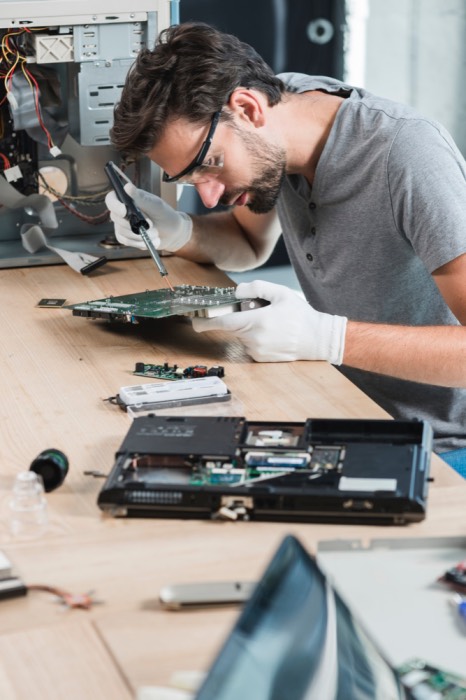
Professional diagnosis may involve:
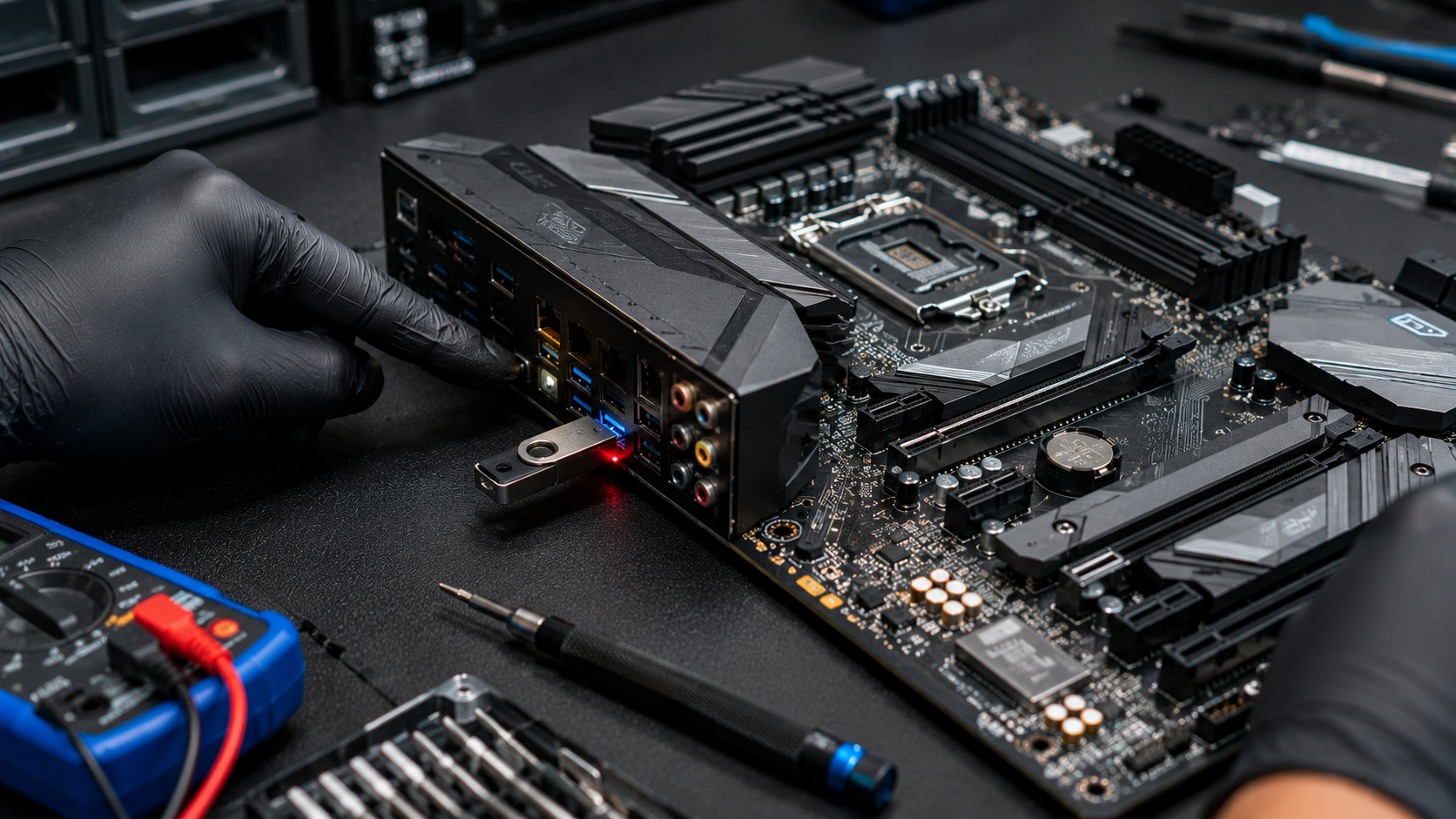
- Digital multimeter testing
- DC power supply testing
- Short-circuit detection
- Voltage-rail measurements
- Component-level testing
- Boardview or schematic analysis
- Microscope inspection
- Soldering and hot-air rework equipment
The important part is not simply having the equipment. The technician must understand the laptop's power sequence and circuit behavior.
When Should You Stop Using Your Laptop or Charger?
Certain symptoms should not be ignored.
Stop using a charger and have it inspected if you notice:
- Burning smell
- Smoke
- Sparking
- Melted connector
- Exposed wires
- Extremely hot adapter
- Burn marks around the charging port
- Repeated electrical noises
- Unusual heat around the charging circuit
Do not continue using visibly damaged electrical equipment simply because the laptop still appears to work.
A charging problem can sometimes become worse if a damaged component remains under electrical stress.
How Much Does Laptop Power IC Repair Cost in Kathmandu?
There is no single fixed price for laptop power IC repair because the actual fault can vary significantly.
The repair cost may depend on:
- Laptop brand and model
- Type of charging circuit
- Failed component
- Extent of motherboard damage
- Availability of replacement ICs or components
- Required chip-level repair work
For example, repairing a damaged charging port is different from replacing a charging IC or troubleshooting a shorted motherboard power rail.
A proper diagnosis is therefore necessary before giving an accurate repair estimate.
Why Choose Guru Computer Solution for Laptop Power Circuit Repair in Kathmandu?
When a laptop stops charging after a power fluctuation, replacing the charger is not always the complete solution.
Guru Computer Solution can diagnose laptop charging and power-related faults with attention to the complete power path.
Depending on the laptop and symptoms, diagnosis may involve:
- Charger testing
- Charging-port inspection
- DC input testing
- Power circuit diagnosis
- MOSFET testing
- Charging IC diagnosis
- Short-circuit testing
- Power-rail measurement
- Motherboard-level troubleshooting
The objective is to identify the actual source of the problem before recommending a repair or replacement.
For customers in Kathmandu, this can help determine whether a charging problem can be solved through component-level repair instead of replacing the entire motherboard.
Protect Your Laptop Before the Next Power Fluctuation
The best time to protect your laptop from electrical problems is before the next voltage fluctuation occurs.
Use a quality compatible charger, avoid damaged adapters, consider appropriate surge protection or UPS equipment, and address unusual charging behavior early.
If your laptop suddenly stops charging after load-shedding or a voltage fluctuation, don't automatically assume that the battery is dead.
The problem could involve the:
Adapter → Charging Port → Protection Circuit → MOSFETs → Charging IC → Power Rails
Finding the actual failure point can make the difference between a relatively simple repair and an unnecessarily expensive motherboard replacement.
If your laptop stopped charging after a voltage fluctuation in Kathmandu, professional diagnosis can help determine whether the issue is with the charger, charging port, battery system, or motherboard power circuitry.
Frequently Asked Questions
Can Load-Shedding Damage a Laptop?
Load-shedding itself does not necessarily damage a laptop. The greater concern is unstable voltage, electrical transients, or fluctuations that can occur around power interruption and restoration.
Can Voltage Fluctuation Damage a Laptop Charger?
Yes. Severe electrical disturbances can damage a laptop adapter or cause it to produce abnormal output. If the charger stops working after a power event, it should be tested before being reused.
Why Did My Laptop Stop Charging After a Voltage Fluctuation?
Possible causes include a damaged adapter, charging port, input MOSFET, fuse, protection component, charging IC, or another part of the laptop's power circuit.
Can Voltage Fluctuation Damage the Laptop Motherboard?
Yes. Severe electrical events can damage components in the motherboard's input and power-management circuits. However, the exact cause must be diagnosed rather than assumed.
How Do I Know If My Laptop Charging IC Is Damaged?
Common symptoms include failure to detect the adapter, battery not charging, intermittent charging, charging indicator problems, or complete power failure. Testing the motherboard is required to confirm a charging IC failure.
Can a Laptop Power IC Be Repaired?
In many cases, yes. If the failed IC and surrounding circuit can be identified and suitable components are available, component-level repair may be possible.
Should I Replace My Charger After a Power Fluctuation?
Not automatically. First test the existing charger and confirm that the replacement meets the laptop's required specifications.
Can a UPS Protect My Laptop During Load-Shedding?
A properly selected UPS can provide backup power and help protect connected equipment against certain power disturbances. The level of protection depends on the UPS design and the electrical environment.
Is a Surge Protector Enough to Protect a Laptop?
A surge protector can help against certain transient events, but it is not a guarantee against all voltage problems. Proper grounding, suitable electrical protection, and a UPS may be appropriate depending on the environment.
Can a Laptop Be Repaired If It Does Not Turn On After a Power Cut?
It may be repairable. The technician may need to inspect the adapter, input circuit, MOSFETs, standby power rails, charging circuit, embedded controller, and other motherboard components.
Should I Keep Charging My Laptop During Voltage Fluctuations?
If the electricity supply is visibly or repeatedly unstable, avoid exposing the laptop to unnecessary electrical stress. Use an appropriate power-protection solution where possible.
Can Power Fluctuation Damage a Laptop Battery?
Electrical problems can affect charging and battery-management circuitry, but battery degradation can also result from age, heat, and normal usage. A battery should be tested rather than automatically blamed.
What Laptop Brands Can Have Power IC Problems?
Power-circuit problems can occur in virtually any laptop brand, including Dell, HP, Lenovo, ASUS, Acer, MSI, and Apple MacBook. The exact circuit and repair method depend on the model.
How Much Does Laptop Power IC Repair Cost in Kathmandu?
The cost depends on the laptop model, failed component, extent of damage, and complexity of the motherboard repair. Diagnosis is recommended before providing an accurate estimate.
When Should I Bring My Laptop to Guru Computer Solution?
Bring your laptop for professional diagnosis if it stopped charging after a voltage fluctuation, does not detect the adapter, repeatedly connects and disconnects from charging, becomes unusually hot around the charging area, or does not turn on after a power interruption.